For many UK patients undergoing medical weight management, an unexpected roadblock often emerges: plateaus caused by chronic workplace and situational stress. Even when adhering strictly to reduced-calorie diets and GLP-1 injection protocols like Mounjaro or Wegovy, elevated levels of the primary stress hormone—cortisol—can actively promote visceral abdominal fat storage, accelerate muscle breakdown, and impair insulin sensitivity.
Understanding the physiological interplay between the hypothalamic-pituitary-adrenal (HPA) axis, autonomic nervous system stress, and metabolic regulation is essential for overcoming weight loss plateaus and protecting long-term metabolic health.
Whether you are optimizing your weight loss routine or managing situational stress, complete a confidential assessment via the WellAssist Pharmacy Hub or explore our core clinical hubs:
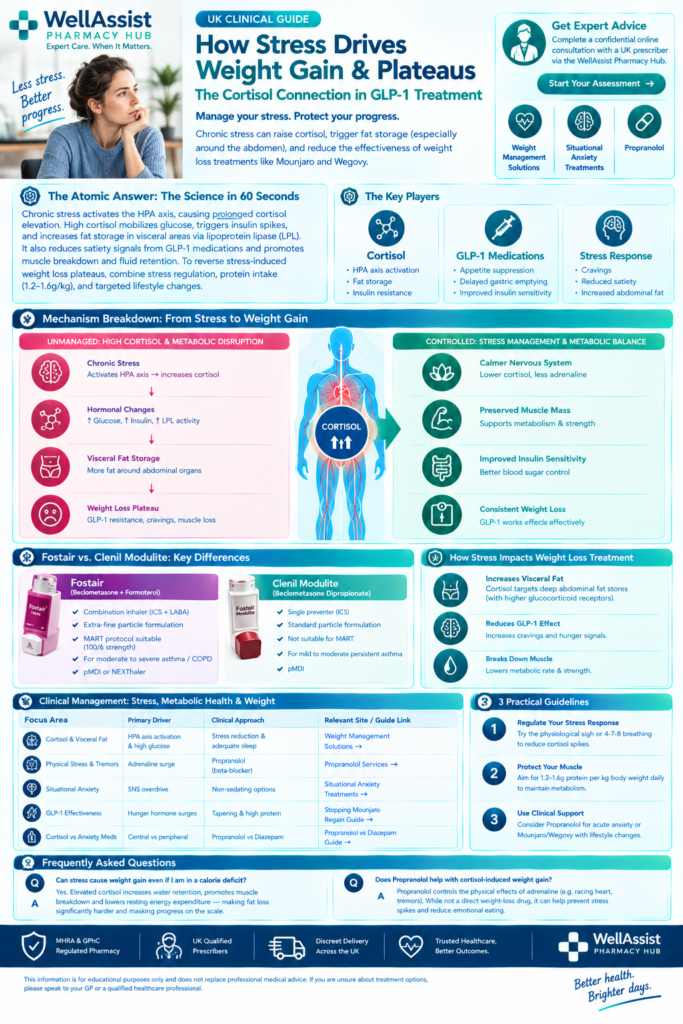
The Science in 60 Seconds
Cortisol-driven weight gain occurs because chronic stress activates the HPA axis, causing prolonged cortisol elevation. High cortisol mobilizes glucose into the bloodstream, triggers insulin spikes, and selectively upregulates lipoprotein lipase (LPL) enzymes in deep visceral adipose tissue—causing fat to accumulate around abdominal organs. Additionally, cortisol counteracts satiety signaling from GLP-1 medications, increases lean muscle breakdown, and causes fluid retention. To reverse stress-induced plateaus, clinicians advise combining sympathetic nervous system regulation, adequate protein intake (1.2–1.6g/kg daily), and targeted stress management protocols.
Mechanism Breakdown: High Cortisol vs. Metabolic Balance
                   ┌─────────────────────────────────────────┐
                   │    Chronic Stress / High Workplace Panic│
                   └────────────────────┬────────────────────┘
                                        │
             ┌──────────────────────────┴──────────────────────────┐
             ▼ UNMANAGED HPA AXIS ACTIVATION                       ▼ REGULATED NERVOUS SYSTEM PROTOCOL
┌─────────────────────────┐                           ┌─────────────────────────┐
│ Prolonged Cortisol &    │                           │ Sympathetic Calming &   │
│ Glucose Surges          │                           │ Stable Hormonal Axis    │
└────────────┬────────────┘                           └────────────┬────────────┘
             │                                                     │
             ▼                                                     ▼
┌─────────────────────────┐                           ┌─────────────────────────┐
│ Visceral Abdominal Fat  │                           │ Preserved Muscle Mass & │
│ Accumulation & Craving  │                           │ Steady Insulin Response │
└────────────┬────────────┘                           └────────────┬────────────┘
             │                                                     │
             ▼                                                     ▼
┌─────────────────────────┐                           ┌─────────────────────────┐
│ Weight Loss Plateau &   │                           │ Consistent Weight Loss  │
│ GLP-1 Resistance        │                           │ & Metabolic Progress    │
└─────────────────────────┘                           └─────────────────────────┘
1. Why Cortisol Targets Abdominal Visceral Fat
Visceral fat cells in the deep abdomen contain higher densities of glucocorticoid receptors than subcutaneous fat elsewhere in the body. When cortisol remains persistently elevated due to chronic stress, these deep fat stores absorb circulating lipids faster, creating stubborn abdominal weight gain.
2. How Stress Counteracts GLP-1 Incretin Therapies
GLP-1 receptor agonists work by delaying gastric emptying and signaling fullness in the brain. However, high cortisol acts as a metabolic signal that triggers intense cravings for high-calorie, sugary foods—effectively fighting against the appetite-suppressing effects of treatments like Mounjaro or Wegovy.
Clinical Management Matrix: Stress, Metabolic Health & Anxiety Solutions
| Health & Metabolic Focus | Primary Biological Driver | Clinical Resolution Protocol | Relevant Site / Guide Link |
| Cortisol & Visceral Fat | HPA axis activation & high glucose | Stress reduction & stable sleep habits | Weight Management Solutions |
| Physical Stress & Tremors | Adrenaline surge on beta receptors | Propranolol (Beta-Blocker) | Propranolol Services |
| Situational Workplace Panic | Sympathetic nervous system overdrive | Non-sedating anxiety support | Situational Anxiety Treatments |
| Comparison of Stress Meds | Central vs. peripheral pathways | Propranolol vs. Diazepam | Propranolol vs Diazepam Guide |
| Acute Anxiety Relief | Vagus nerve & breathing mechanics | 5-Minute Grounding Protocols | 5-Minute Fast Anxiety Relief Guide |
| Post-GLP-1 Weight Regain | Hunger hormone surges post-treatment | Step-down tapering & high protein | Stopping Mounjaro Regain Guide |
| Facial Fat & Muscle Loss | Rapid calorie deficit & protein loss | Collagen precursors & steady pacing | Ozempic Face Prevention Guide |
3 Practical Guidelines to Lower Cortisol and Break Weight Loss Plateaus
- Incorporate Rapid Parasympathetic Grounding: Practice somatic calming routines like the Physiological Sigh or 4-7-8 breathing during acute work stress to halt adrenaline spikes before they elevate cortisol.
- Protect Skeletal Muscle with High Protein: High cortisol accelerates muscular protein breakdown. Ensure a baseline of 1.2–1.6g of protein per kg of body weight daily to preserve muscle and protect your basal metabolic rate.
- Manage Acute Situational Anxiety: If workplace presentations or high-stakes events trigger severe physical stress, utilizing prescribed solutions like Propranolol Services can help keep your heart rate steady and limit physical panic cycles.
Yes. While a calorie deficit is required for fat loss, elevated cortisol increases water retention, promotes muscle breakdown over fat tissue, and lowers resting energy expenditure—making fat loss significantly harder and masking progress on the scale.
Propranolol blocks the physical effects of adrenaline (like racing heart and tremors) during acute performance anxiety. While it is not a direct weight-loss drug, controlling acute fight-or-flight spikes can help prevent downstream stress responses and emotional eating.