For professionals, students, and performers across the UK, physical anxiety symptoms—such as a pounding heart, trembling hands, and a quivering voice—can hijack crucial presentations or high-pressure events. While traditional anxiety management often focuses on cognitive strategies, short-acting beta-blockers like Propranolol address the physical adrenaline response directly, allowing you to maintain composure under pressure.
If you are exploring treatments for performance anxiety or building a broader wellness strategy, you can complete a private medical assessment on the WellAssist Pharmacy Hub or review our top clinical treatment hubs, including Propranolol Services, Situational Anxiety Treatments, and Weight Management Solutions.
The Science in 60 Seconds
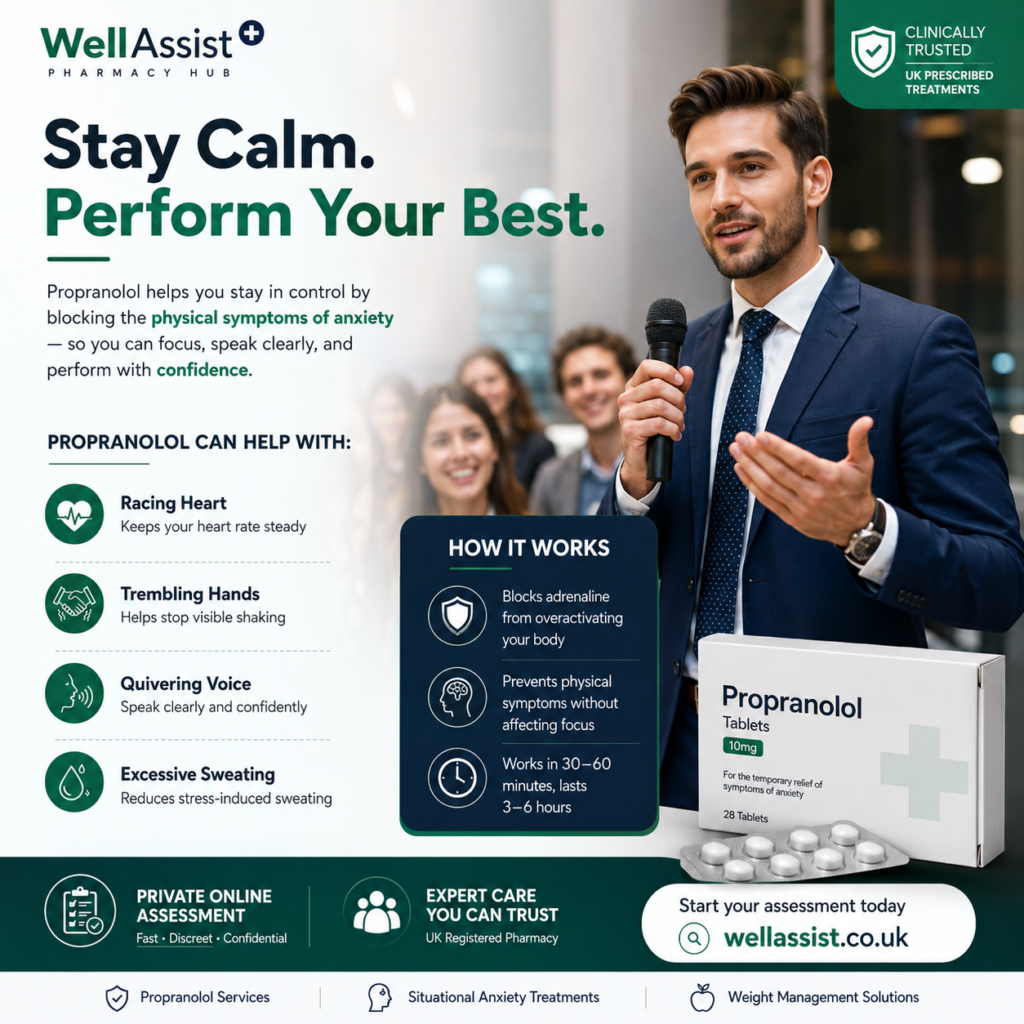
Propranolol is a non-selective beta-adrenergic receptor blocker that prevents adrenaline from binding to beta-1 (heart) and beta-2 (vascular/bronchial) receptors. By blocking peripheral adrenaline signaling, Propranolol stops physical anxiety manifestations—such as tachycardia (racing heart), tremors, sweating, and vocal tremors—without causing sedation or altering cognitive acuity. A single low dose taken 30 to 60 minutes before a public event provides 3 to 6 hours of physical symptom control.
Mechanism Breakdown: How Beta-Blockers Subdue Physical Panic
                   ┌─────────────────────────────────────────┐
                   │   Anticipatory Stress / Trigger Event   │
                   └────────────────────┬────────────────────┘
                                        │
             ┌──────────────────────────┴──────────────────────────┐
             ▼ UNTREATED ADRENALINE SURGE                          ▼ WITH PROPRANOLOL (BETA-BLOCKADE)
┌─────────────────────────┐                           ┌─────────────────────────┐
│ Adrenaline Binds Beta   │                           │ Beta-1 & Beta-2         │
│ Receptors in Organs     │                           │ Receptors Blocked       │
└────────────┬────────────┘                           └────────────┬────────────┘
             │                                                     │
             ▼                                                     ▼
┌─────────────────────────┐                           ┌─────────────────────────┐
│ Tachycardia, Tremors,   │                           │ Normal Heart Rate &     │
│ Shortness of Breath     │                           │ Steady Hands/Voice      │
└────────────┬────────────┘                           └────────────┬────────────┘
             │                                                     │
             ▼                                                     ▼
┌─────────────────────────┐                           ┌─────────────────────────┐
│ Feedback Loop Escalates │                           │ Cognitive Control       │
│ Psychological Panic     │                           │ Maintained Under Stress │
└─────────────────────────┘                           └─────────────────────────┘
1. Interrupting the Peripheral Adrenaline Loop
When facing a high-stress scenario, your sympathetic nervous system floods the bloodstream with epinephrine (adrenaline). Propranolol physically occupies the receptor sites on cardiac tissue, keeping your heart rate steady and preventing the physical feedback loop that escalates mind-centered panic into full-blown stage fright.
2. Preserving Full Mental Clarity
Unlike sedatives or benzodiazepines, Propranolol does not affect central nervous system neurotransmitters like GABA. It leaves your memory, speech processing, and reaction time completely uninhibited—making it uniquely suited for high-stakes professional environments.
Comparing Performance Anxiety Treatment Approaches
| Feature | Propranolol (Beta-Blocker) | Benzodiazepines | Cognitive Behavioral Therapy (CBT) | Top Page Link |
| Primary Target | Physical Symptoms (Heart Rate/Tremors) | Central Nervous System Sedation | Psychological Thought Patterns | Propranolol Services |
| Onset of Action | 30 – 60 minutes | 30 – 60 minutes | Long-term therapy (weeks) | Situational Anxiety |
| Cognitive Acuity | 100% Unaffected (Non-Sedating) | Drowsiness / Impaired memory | Unaffected | Situational Anxiety Treatments |
| Habit Formation Risk | None (Non-addictive) | High (Requires strict monitoring) | None | WellAssist Pharmacy Hub |
| Holistic Care Integration | Pairs well with lifestyle care | Restricted use | Excellent long-term basis | Weight Management |
3 Practical Steps for Using Propranolol Safely
- Conduct a Trial Run in Advance: Never take Propranolol for the first time on the day of an important speech. Take your prescribed dose on a quiet day at home to observe how your body responds and confirm dosage timing.
- Time Your Administration Correctly: Peak blood levels occur approximately 1 to 2 hours after ingestion. Taking your tablet roughly 45 to 60 minutes prior to walking on stage ensures maximum physical coverage.
- Screen for Contraindications: Because beta-blockers affect bronchial pathways, Propranolol is generally avoided by individuals with asthma, severe reactive airway disease, or low baseline blood pressure. Always complete a full assessment via our Propranolol Services prior to use.
Propranolol begins working within 30 to 60 minutes, with peak therapeutic effect reached between 1 and 2 hours after taking the tablet. The physical calming benefits typically last for 4 to 6 hours.
Propranolol does not remove psychological worry, but it removes the physical symptoms—racing heart, shaky hands, trembling voice—that make public speaking feel terrifying. By controlling physical panic, it builds long-term confidence over time.