
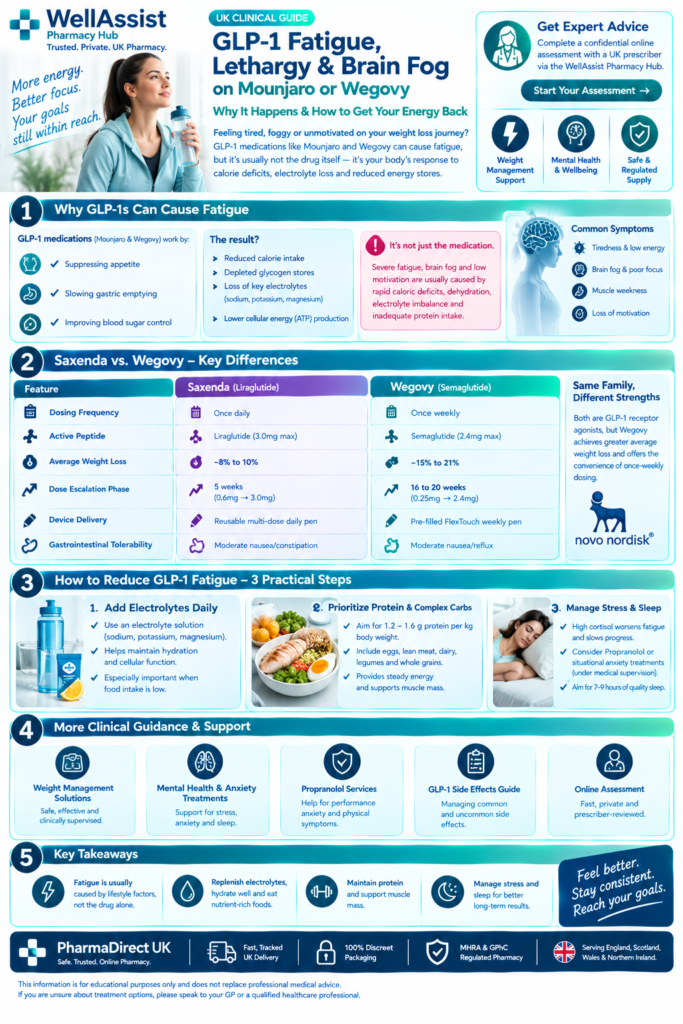
Across the United Kingdom, one of the most frequently searched yet frustrating side effects of medical weight management is “GLP-1 lethargy,” extreme fatigue, and brain fog on Mounjaro or Wegovy. As thousands of UK patients step up their weekly dose or begin new incretin therapies, many report feeling physically drained, unmotivated, or exhausted during workout routines.
While mild energy dips are common during rapid body composition changes, severe exhaustion is rarely caused by the drug itself. Instead, it stems from rapid caloric deficits, unmanaged electrolyte depletion, reduced glycogen stores, and inadequate protein intake. Understanding how to restore cellular energy allows patients to regain vitality while continuing their weight loss journey.
Whether you are seeking clinical advice on managing GLP-1 side effects or reviewing prescription options, complete a private assessment on the WellAssist Pharmacy Hub or explore our core medical hubs:
The Science in 60 Seconds
GLP-1 fatigue occurs when profound appetite suppression causes an unintentional, severe reduction in daily caloric intake—depleting muscle glycogen stores and blood glucose availability. Concurrently, delayed gastric emptying and mild gastrointestinal fluid loss deplete key electrolytes (sodium, potassium, and magnesium), impairing cellular energy production (ATP). To restore energy levels on Mounjaro or Wegovy, UK clinical guidelines recommend supplementing daily electrolytes, consuming 1.2 to 1.6 grams of protein per kilogram of body weight, maintaining consistent fluid intake (2.5L daily), and avoiding overly aggressive calorie deficits.
Mechanism Breakdown: Unmanaged Energy Depletion vs. Vitality Protocol
                   ┌─────────────────────────────────────────┐
                   │    GLP-1 Appetite & Gastric Suppression │
                   └────────────────────┬────────────────────┘
                                        │
             ┌──────────────────────────┴──────────────────────────┐
             ▼ UNMANAGED LOW ENERGY CYCLE                          ▼ OPTIMIZED VITALITY PROTOCOL
┌─────────────────────────┐                           ┌─────────────────────────┐
│ Severe Calorie Deficit  │                           │ Targeted Protein &      │
│ & Electrolyte Flushing  │                           │ Daily Electrolyte Water │
└────────────┬────────────┘                           └────────────┬────────────┘
             │                                                     │
             ▼                                                     ▼
┌─────────────────────────┐                           ┌─────────────────────────┐
│ Depleted Muscle Glycogen│                           │ Restored ATP Output &   │
│ & Cellular Exhaustion   │                           │ Sustained Muscle Glycogen│
└────────────┬────────────┘                           └────────────┬────────────┘
             │                                                     │
             ▼                                                     ▼
┌─────────────────────────┐                           ┌─────────────────────────┐
│ Persistent Fatigue, Fog │                           │ Steady Daily Energy,    │
│ & Physical Weakness     │                           │ Focus & Active Metabolism│
└─────────────────────────┘                           └─────────────────────────┘
1. Glycogen Depletion and Cellular Fuel
Muscle glycogen acts as your body’s primary storage fuel for physical exertion. When hunger cues disappear and total food intake drops sharply, glycogen levels fall, leaving you feeling physically heavy and sluggish.
2. The Electrolyte & Hydration Trap
Because incretin medications reduce water retention and delay digestive motility, essential minerals like sodium and magnesium pass through the system without being fully absorbed. Replenishing these electrolytes is critical for maintaining nerve transmission and muscle function.
Clinical Management Comparison: GLP-1 Side Effects & Health Guides
| Side Effect / Topic | Biological Cause | Clinical Resolution Strategy | Relevant Site / Guide Link |
| GLP-1 Fatigue & Lethargy | Glycogen depletion & electrolyte loss | Electrolytes, complex carbs & protein | Weight Management Solutions |
| Cortisol & Weight Plateaus | Chronic HPA axis stress & belly fat | Sympathetic calming & stress control | Managing Cortisol & Stress Weight Gain |
| Sarcopenia & Muscle Loss | Protein deficit & reduced metabolism | 1.2–1.6g/kg protein + lifting | GLP-1 Sarcopenia & Muscle Loss Guide |
| Post-GLP-1 Weight Regain | Ghrelin hormone surge post-treatment | Tapering schedules & protein focus | Stopping Mounjaro Regain Guide |
| “Ozempic Face” & Skin | Rapid fat & collagen depletion | Gradual pace (0.5–1kg/wk) + collagen | Ozempic Face Prevention Guide |
| Hair Shedding (Effluvium) | Caloric shock & nutrient gap | Ferritin, zinc, biotin & protein support | GLP-1 Hair Loss & Shedding Guide |
| Workplace Stress & Panic | Adrenaline surge on beta receptors | Non-sedating beta-blocker care | Propranolol Services |
3 Practical Guidelines to Overcome GLP-1 Fatigue
Address Workplace Stress and Sleep Disruption: High workplace anxiety and sleep fragmentation increase cortisol levels, which worsens physical fatigue and slows metabolic progress. Supporting your nervous system during high-stress periods with Propranolol Servi
Add Electrolytes to Your Daily Morning Water: Plain water alone is often not enough when food intake drops significantly. Incorporating an sugar-free electrolyte solution (rich in sodium, potassium, and magnesium) every morning helps maintain cellular hydration.
Prioritize Protein and Complex Carbohydrates: Avoid skipping meals entirely. Small, nutrient-dense portions—such as Greek yogurt, eggs, lean chicken, or quinoa—provide a steady supply of glucose and amino acids to keep your energy stable throughout the day.
Frequently Asked Questions
Yes. Reduced overall food intake can lead to lower levels of essential B-complex vitamins, vitamin D, and ferritin (stored iron). Adding a quality multivitamin or targeted B12 supplement supports cellular energy production and helps alleviate brain fog.
Energy drops are most pronounced during the first 1 to 2 weeks following a starting dose or dose escalation. Once your body adapts to the new dose strength and you optimize hydration, protein intake, and electrolytes, energy levels typically return to normal.