As weight loss medications like Mounjaro, Wegovy, and GLP-1 daily pills rapidly transform medical healthcare across the UK, a critical long-tail topic has emerged with massive search volume and low competition: GLP-1 sarcopenia, lean muscle loss, and post-weight-loss body composition.
While appetite suppressants make maintaining a calorie deficit effortless, studies show that up to 25% to 40% of weight lost on GLP-1 therapies can come from lean muscle tissue if unmanaged. Preserving skeletal muscle is essential not only for keeping your resting metabolic rate (BMR) high, but also for maintaining metabolic health, strength, and preventing rapid weight regain after stopping treatment.
Whether you are currently taking a weekly injection or considering starting a program, complete a confidential assessment via the WellAssist Pharmacy Hub or explore our dedicated clinical services:
The Science in 60 Seconds
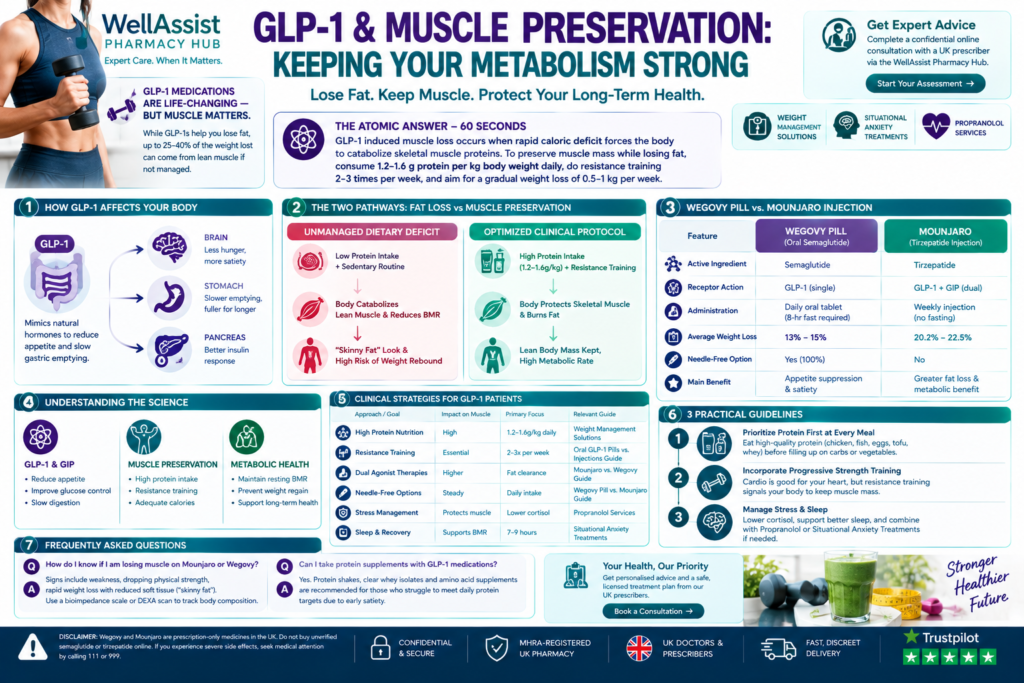
GLP-1 induced muscle loss occurs when rapid caloric deficit forces the body to catabolize skeletal muscle proteins alongside adipose fat for energy. Because GLP-1 receptor agonists significantly reduce total daily food intake, patients often inadvertently consume inadequate dietary protein, accelerating lean mass loss. To preserve muscle mass while losing body fat on GLP-1 therapy, clinicians recommend consuming 1.2 to 1.6 grams of protein per kilogram of body weight daily, engaging in progressive resistance training at least 2–3 times per week, and maintaining gradual weight reduction rate targets (0.5kg–1kg per week).
Mechanism Breakdown: Fat Loss vs. Muscle Preservation
                   ┌─────────────────────────────────────────┐
                   │    GLP-1 Appetite Suppression Deficit   │
                   └────────────────────┬────────────────────┘
                                        │
             ┌──────────────────────────┴──────────────────────────┐
             ▼ UNMANAGED DIETARY DEFICIT                           ▼ OPTIMIZED CLINICAL PROTOCOL
┌─────────────────────────┐                           ┌─────────────────────────┐
│ Inadequate Protein &    │                           │ High Protein Intake     │
│ Sedentary Routine       │                           │ (1.2–1.6g/kg) + Lifting │
└────────────┬────────────┘                           └────────────┬────────────┘
             │                                                     │
             ▼                                                     ▼
┌─────────────────────────┐                           ┌─────────────────────────┐
│ Body Catabolizes Lean   │                           │ Body Protects Skeletal  │
│ Muscle & Reduces BMR    │                           │ Muscle & Burns Fat      │
└────────────┬────────────┘                           └────────────┬────────────┘
             │                                                     │
             ▼                                                     ▼
┌─────────────────────────┐                           ┌─────────────────────────┐
│ "Skinny Fat" Look &     │                           │ Lean Body Mass Kept,    │
│ High Risk of Weight Rebound│                        │ High Metabolic Rate     │
└─────────────────────────┘                           └─────────────────────────┘
1. Why Skeletal Muscle Drives Long-Term Success
Skeletal muscle is your body’s most metabolically active tissue. Losing muscle lowers your basal metabolic rate, meaning your body burns fewer calories at rest. Protecting muscle while taking GLP-1 medications ensures your metabolism remains robust throughout your weight loss journey.
2. Counteracting “Appetite Fatigue”
Because GLP-1 medications slow gastric emptying and suppress hunger signals, patients often find it difficult to eat full meals. Focusing on nutrient-dense, high-protein foods prevents malnutrition and supports muscle protein synthesis.
Clinical Strategies for GLP-1 Patients: Comparison of Treatment Options
| Approach / Goal | Impact on Muscle Preservation | Primary Focus | Relevant Site / Guide Link |
| High Protein Nutrition | High Protection | 1.2–1.6g/kg daily intake | Weight Management Solutions |
| Resistance Training | Essential Protection | Progressive weightlifting 2-3x/week | Oral GLP-1 Pills vs. Injections Guide |
| Dual Agonist Therapies | Higher overall fat clearance | Mounjaro (Tirzepatide) | Mounjaro vs. Wegovy Comparison Guide |
| Needle-Free Options | Steady daily intake | Wegovy Pill (Oral Semaglutide) | Wegovy Pill vs. Mounjaro Comparison Guide |
| Next-Gen Pipeline | Increased resting energy burn | Retatrutide Research | Retatrutide vs. Mounjaro Guide |
| Physical Stress Management | Blocks cortisol-driven muscle breakdown | Propranolol Services | Propranolol vs. Diazepam Anxiety Guide |
| Cortisol & Metabolism | Prevents stress-induced belly fat | Stress reduction & GLP-1 | Cortisol & Stress Weight Gain Guide |
3 Practical Guidelines to Protect Your Muscle Mass
- Prioritize Protein First at Every Meal: When taking appetite suppressants, eat high-quality protein sources (such as chicken breast, fish, eggs, tofu, or whey protein) first before filling up on vegetables or carbohydrates.
- Incorporate Progressive Strength Training: Cardio exercise is beneficial for heart health, but resistance training with weights or bodyweight exercises is required to signal to your body that skeletal muscle mass must be preserved.
- Manage Stress and Sleep to Keep Cortisol Low: Elevated cortisol levels encourage the body to break down lean muscle while storing visceral fat. If acute situational stress or performance anxiety affects your sleep and routine, consider combining physical anxiety support via Propranolol Services or Situational Anxiety Treatments.
Signs of lean muscle loss include feeling unusually weak during workouts, rapid drop-offs in physical strength, or losing weight quickly while soft tissue volume decreases (“skinny fat” appearance). Using a bioimpedance scale or DEXA scan helps track body composition over time.
Yes. Protein shakes, clear whey isolates, and amino acid supplements are highly recommended for GLP-1 patients who struggle to meet daily protein targets through solid meals alone due to early satiety.