Across the UK, patients navigating metabolic health improvements frequently encounter overlapping challenges with situational stress, performance anxiety, and weight management. Clinical research shows a strong biological link between elevated stress hormones—such as cortisol and adrenaline—and difficulty maintaining a healthy weight.
Understanding how appetite regulation treatments and anxiety therapies interact helps patients build a comprehensive, sustainable healthcare strategy.
If you are evaluating treatments for weight management or managing physical stress symptoms, you can complete a private digital assessment via the WellAssist Pharmacy Hub or explore our core clinical services, including Weight Management Solutions, Situational Anxiety Treatments, and Propranolol Services.
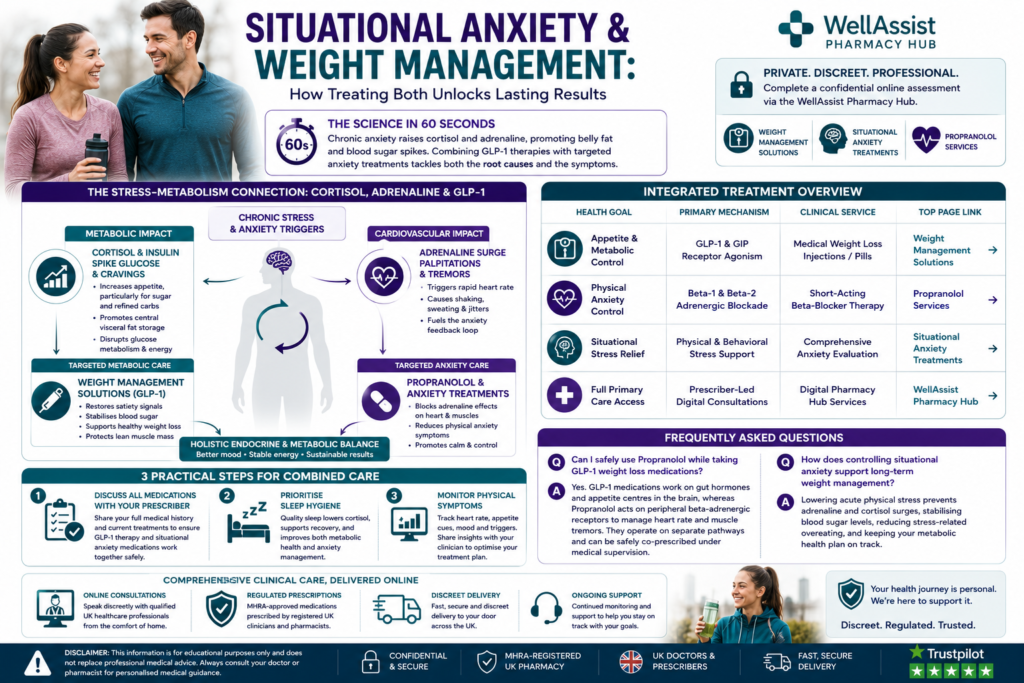
The Science in 60 Seconds
Direct Answer: Chronic situational anxiety triggers elevated cortisol and adrenaline levels, which promote central visceral fat retention and disrupt glucose metabolism. Combining GLP-1 receptor agonists (which restore metabolic satiety and stabilize blood sugar) with targeted physical anxiety treatments like Propranolol (which controls rapid heart rate and tremors) creates a multi-system approach that addresses both the psychological and metabolic barriers to sustainable health.
The Stress-Metabolism Connection: Cortisol, Adrenaline & GLP-1
                   ┌─────────────────────────────────────────┐
                   │    Chronic Stress & Anxiety Triggers    │
                   └────────────────────┬────────────────────┘
                                        │
             ┌──────────────────────────┴──────────────────────────┐
             ▼ METABOLIC IMPACT                                    ▼ CARDIOVASCULAR IMPACT
┌─────────────────────────┐                           ┌─────────────────────────┐
│ Cortisol & Insulin      │                           │ Adrenaline Surge        │
│ Spike Glucose & Craving │                           │ Palpitations & Tremors  │
└────────────┬────────────┘                           └────────────┬────────────┘
             │                                                     │
             ▼ TARGETED METABOLIC CARE                             ▼ TARGETED ANXIETY CARE
┌─────────────────────────┐                           ┌─────────────────────────┐
│ Weight Management       │                           │ Propranolol & Anxiety   │
│ Solutions (GLP-1)       │                           │ Treatments              │
└────────────┬────────────┘                           └────────────┬────────────┘
             │                                                     │
             └──────────────────────────┬──────────────────────────┘
                                        │
                                        ▼
                   ┌─────────────────────────────────────────┐
                   │ Holistic Endocrine & Metabolic Baseline │
                   └─────────────────────────────────────────┘
1. Stress-Induced Emotional Eating & Insulin Spikes
When situational anxiety triggers cortisol production, the liver mobilizes glucose for quick energy. Without physical activity to burn this glucose, insulin levels spike, signalling the body to store fat around the abdomen and triggering intense carbohydrate cravings.
2. Interrupting Physical Panic Loops
Physical stress reactions—such as a racing pulse or trembling hands—feed back into the brain, heightening anxiety and worsening metabolic distress. Short-acting beta-blockers block adrenaline receptors in heart and muscle tissues, maintaining physical composure during high-pressure events.
Integrated Treatment Overview
| Health Goal | Primary Mechanism | Clinical Service | Top Page Link |
| Appetite & Metabolic Control | GLP-1 & GIP Receptor Agonism | Medical Weight Loss Injections / Pills | Weight Management |
| Physical Anxiety Control | Beta-1 & Beta-2 Adrenergic Blockade | Short-Acting Beta-Blocker Therapy | Propranolol Services |
| Situational Stress Relief | Physical & Behavioral Stress Support | Comprehensive Anxiety Evaluation | Situational Anxiety |
| Full Primary Care Access | Prescriber-Led Digital Consultations | Digital Pharmacy Hub Services | WellAssist Pharmacy Hub |
3 Practical Steps for Combined Care
- Discuss All Medications with Your Prescriber: Disclose all current treatments during your consultation to verify that GLP-1 therapy and situational stress medications complement each other safely.
- Prioritize Sleep Hygiene: Cortisol levels naturally decline at night. Maintaining consistent sleep hours supports nighttime recovery, aiding both metabolic weight loss and anxiety management.
- Monitor Physical Symptoms: Tracking heart rate, appetite cues, and stress triggers provides valuable data for your clinician to optimize dosages during routine check-ins.
Yes. GLP-1 medications work on gut hormones and appetite centers in the brain, whereas Propranolol acts on peripheral beta-adrenergic receptors to manage heart rate and muscle tremors. They operate on separate pathways and can be safely co-prescribed under medical supervision.
Lowering acute physical stress prevents adrenaline and cortisol surges, stabilizing baseline blood sugar levels, reducing stress-related overeating, and keeping your metabolic health plan on track.