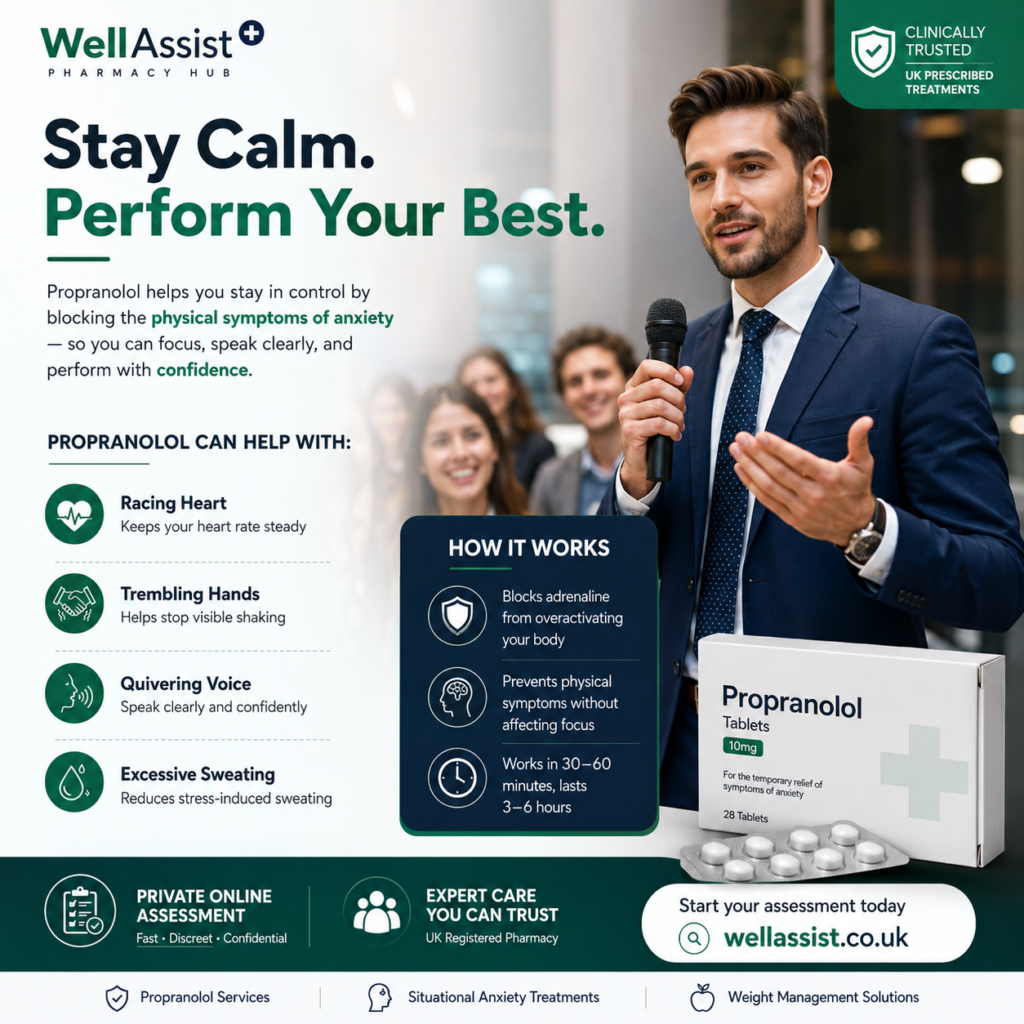

Search interest across the UK regarding high cortisol level symptoms, stress-induced abdominal fat retention, and metabolic healthcare has hit an all-time high. Many patients struggling with stubborn weight gain around the waistline discover that chronic daily stress and situational performance anxiety actively impair their body’s ability to burn fat.
By combining targeted appetite regulation with physical stress control, patients can break the biological cycle linking high cortisol to metabolic dysfunction.
Whether you are seeking a digital assessment for metabolic health or looking to manage situational stress, explore the WellAssist Pharmacy Hub or browse our core medical services:
The Science in 60 Seconds
Chronic stress causes elevated cortisol levels, which signal the liver to release excess glucose into the bloodstream. When this glucose goes unburned during psychological stress, insulin surges—driving visceral fat accumulation specifically around the abdomen while increasing cravings for high-calorie carbohydrates. Modern treatment protocols address this dual challenge by pairing GLP-1 receptor agonists (which restore metabolic satiety and delay gastric emptying) with targeted physical anxiety care like Propranolol (which blocks adrenaline surges and racing pulse).
How Stress & Cortisol Drive Abdominal Fat Retention
                   ┌─────────────────────────────────────────┐
                   │   Chronic Stress & Anxiety Triggers     │
                   └────────────────────┬────────────────────┘
                                        │
             ┌──────────────────────────┴──────────────────────────┐
             ▼ ENDOCRINE METABOLIC PATHWAY                         ▼ CARDIOVASCULAR ADRENALINE PATHWAY
┌─────────────────────────┐                           ┌─────────────────────────┐
│ Cortisol Spikes Glucose │                           │ Adrenaline Triggers     │
│ & Insulin Storage       │                           │ Tremors & Racing Heart  │
└────────────┬────────────┘                           └────────────┬────────────┘
             │                                                     │
             ▼                                                     ▼
┌─────────────────────────┐                           ┌─────────────────────────┐
│ Targeted Metabolic Care │                           │ Targeted Beta-Blocker   │
│ Weight Management GLP-1 │                           │ Propranolol Services    │
└────────────┬────────────┘                           └────────────┬────────────┘
             │                                                     │
             └──────────────────────────┬──────────────────────────┘
                                        │
                                        ▼
                   ┌─────────────────────────────────────────┐
                   │ Holistic Recovery & Fat Loss Baseline   │
                   └─────────────────────────────────────────┘
1. Cortisol-Induced Visceral Fat Storage
Deep abdominal fat (visceral fat) contains a high density of cortisol receptors compared to subcutaneous fat elsewhere on the body. When cortisol remains elevated, it continuously signals fat cells to store lipogenic triglycerides specifically around internal organs, increasing cardiometabolic risk.
2. Restoring Satiety with Incretin Therapies
Incretin-based treatments like GLP-1 Weight Management Injections & Oral Pills act on brain receptors to counteract stress-induced cravings, reducing food noise and keeping blood glucose levels stable throughout the day.
Interlinking Strategy: Core Products & High-Impression Articles
To better understand your options, explore our top-performing clinical articles and treatment portals:
| Service / High-Impression Topic | Primary Focus | Internal Anchor Link |
| WellAssist Main Portal | Prescriber-Led Digital Clinic | WellAssist Pharmacy Hub |
| Medical Weight Loss Hub | Injections & Oral GLP-1 Treatments | Weight Management Solutions |
| Physical Anxiety Hub | Short-Acting Beta-Blocker Therapy | Propranolol Services |
| Situational Stress Care | Performance Anxiety Solutions | Situational Anxiety Treatments |
| Related High-Ranking Guide | Oral Pills vs. Weekly Injections | Oral GLP-1 Pills vs. Injections Guide |
| Related High-Ranking Guide | Next-Gen Multi-Agonist Research | Vaxia Pharma & Retatrutide Science |
| Related High-Ranking Guide | Public Speaking & Stage Fright | Propranolol Performance Anxiety Guide |
| Related High-Ranking Guide | Metabolic & Mental Health | Combining GLP-1 & Anxiety Care |
3 Actionable Steps to Reduce Stress-Related Fat Retention
- Maintain Consistent Sleep Intervals: Cortisol naturally peaks during the early morning hours and drops to its lowest baseline near midnight. Aim for 7–8 hours of consistent sleep to keep your endocrine system balanced.
- Combine Therapies Under Supervision: If physical stress reactions (like a pounding heart before public speaking) trigger stress eating, manage the physical adrenaline surge with Propranolol Services while maintaining your appetite baseline with Weight Management Solutions.
- Prioritize Resistance Training: Strength training improves insulin sensitivity and prevents lean muscle loss, helping keep your metabolic rate elevated while losing weight.
Cortisol increases blood sugar by mobilizing glucose stores. When this excess sugar isn’t burned through physical exertion, insulin converts it into visceral fat, which binds predominantly to the high number of cortisol receptors in the abdomen.
Yes. GLP-1 medications target appetite centers in the brain, significantly reducing “food noise” and emotional cravings associated with high stress and anxiety levels.