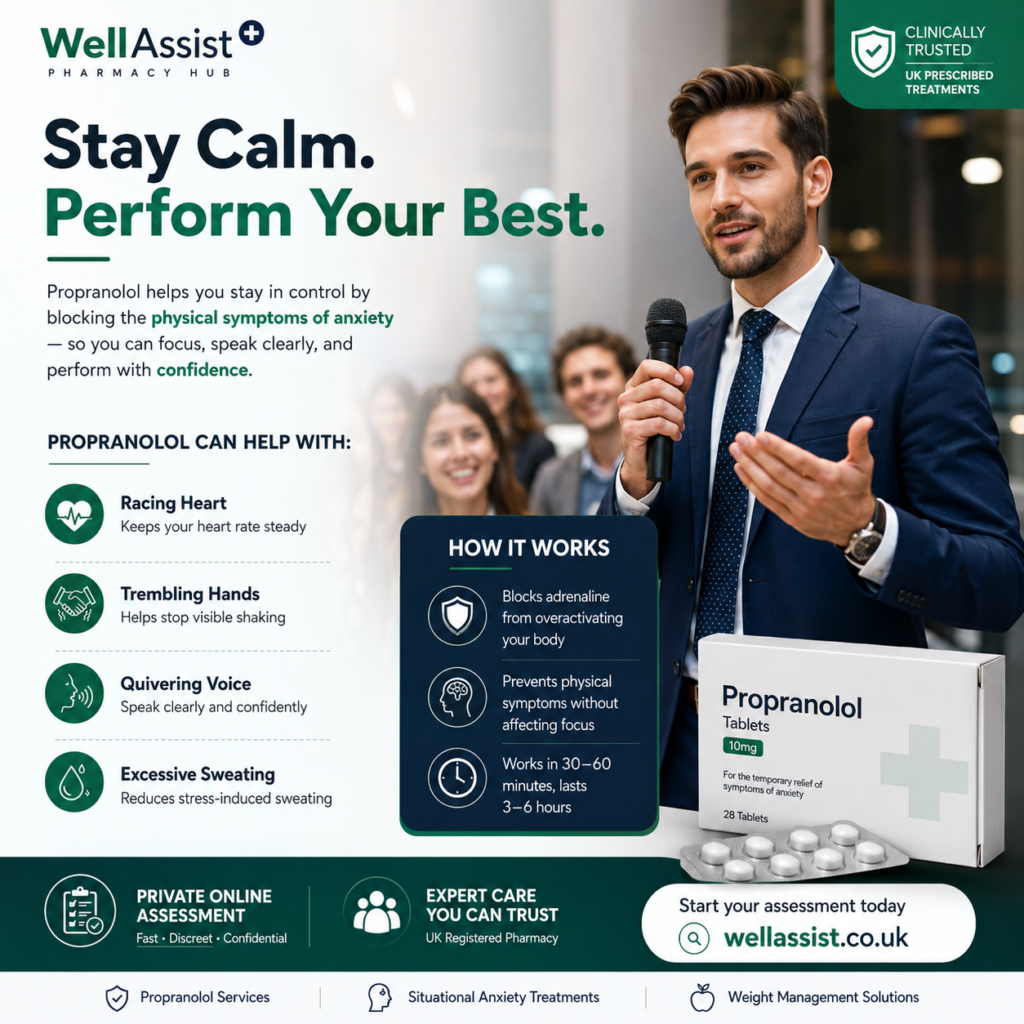
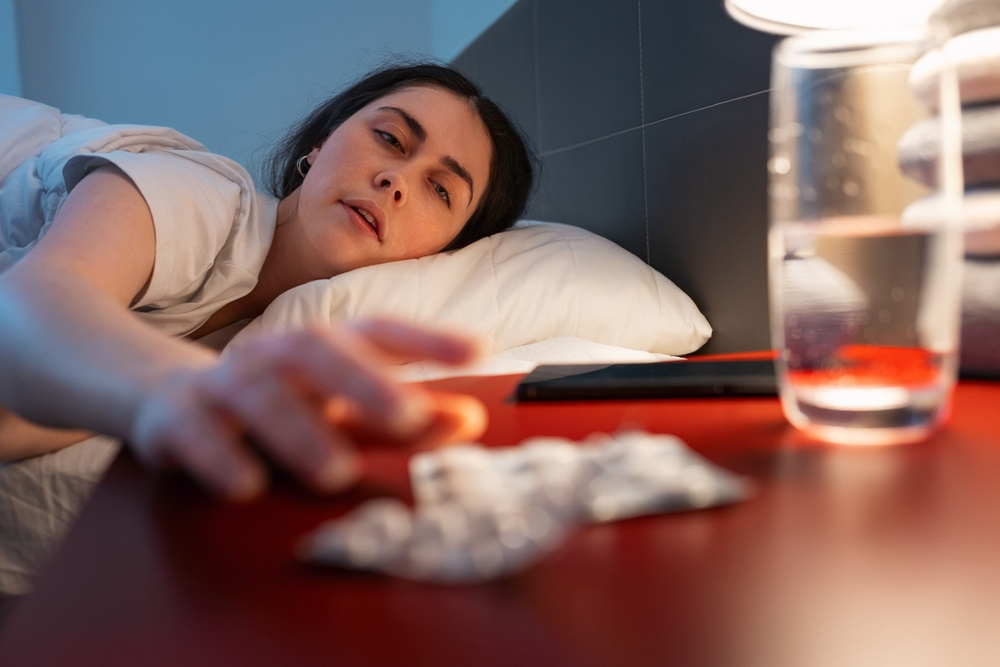
Search queries regarding Propranolol vs. Diazepam for performance anxiety, public speaking, and acute panic generate thousands of impressions every month across UK medical search engines. When facing high-pressure situations—such as job interviews, stage presentations, or driving tests—patients frequently search for the safest, non-sedating option to keep panic from disrupting their success.
While both prescription medications are utilized for situational stress, they operate through completely different physiological pathways. Understanding the differences between a beta-blocker (Propranolol) and a benzodiazepine (Diazepam) is essential for making an informed, safe clinical decision.
To complete a private, online consultation with UK prescribers, visit the WellAssist Pharmacy Hub or browse our core clinical treatment hubs:
The Science in 60 Seconds
Propranolol is a non-selective beta-blocker that stops physical anxiety symptoms—such as a racing heart, trembling hands, and a quivering voice—by blocking peripheral adrenaline receptors without causing sedation. Diazepam is a central nervous system (CNS) depressant (benzodiazepine) that enhances GABA activity in the brain to reduce psychological fear, but carries risks of drowsiness, cognitive slowing, and habit formation. For performance events where mental sharpness is required, Propranolol is widely preferred by UK prescribers over Diazepam.
Mechanism Breakdown: Peripheral vs. Central Nervous System
                   ┌─────────────────────────────────────────┐
                   │    Situational Performance Anxiety      │
                   └────────────────────┬────────────────────┘
                                        │
             ┌──────────────────────────┴──────────────────────────┐
             ▼ PROPRANOLOL (BETA-BLOCKER)                           ▼ DIAZEPAM (BENZODIAZEPINE)
┌─────────────────────────┐                           ┌─────────────────────────┐
│ Blocks Peripheral Beta-1│                           │ Enhances Central GABA   │
│ & Beta-2 Receptors      │                           │ Neurotransmitter Action │
└────────────┬────────────┘                           └────────────┬────────────┘
             │                                                     │
             ▼                                                     ▼
┌─────────────────────────┐                           ┌─────────────────────────┐
│ Prevents Racing Heart,  │                           │ Calms Brain Activity &  │
│ Tremors & Vocal Shakes  │                           │ Dampens Psychological   │
└────────────┬────────────┘                           └────────────┬────────────┘
             │                                                     │
             ▼                                                     ▼
┌─────────────────────────┐                           ┌─────────────────────────┐
│ 100% Mental Clarity     │                           │ Sedation Risk & Slowed  │
│ (Non-Sedating)          │                           │ Cognitive Processing    │
└─────────────────────────┘                           └─────────────────────────┘
1. Propranolol (Peripheral Beta-Blockade)
Propranolol acts outside the brain on cardiac and vascular receptors. It prevents adrenaline from speeding up your heart rate or causing muscle tremors, breaking the physical feedback loop that escalates stage fright while keeping your mind sharp and alert.
2. Diazepam (Central Sedation)
Diazepam targets brain receptors directly to quiet neural firing. While effective at dampening acute mental panic, its central sedative action can slow reaction times, impair speech recall, and cause motor incoordination—making it less ideal for public speaking or cognitive tasks.
Head-to-Head Comparison: Propranolol vs. Diazepam
| Clinical Feature | Propranolol (Beta-Blocker) | Diazepam (Benzodiazepine) | Relevant Site / Guide Link |
| Primary Mechanism | Peripheral Beta-Adrenergic Receptor Blockade | Central GABA Neurotransmitter Enhancement | Propranolol Services |
| Target Symptoms | Physical (Tachycardia, Tremors, Sweating) | Psychological Fear & Emotional Agitation | Situational Anxiety |
| Impact on Mental Acuity | 100% Alert (Non-Sedating) | Sedating (Risk of Drowsiness / Brain Fog) | Propranolol Public Speaking Guide |
| Dependence / Habit Risk | None (Non-Controlled) | Moderate to High (Controlled Substance) | WellAssist Pharmacy Hub |
| Ideal For | Public Speaking, Presentations, Auditions | Severe Short-Term Crisis Panic | Combining Anxiety & Metabolic Care |
| Metabolic Health Link | Prevents stress eating & cortisol spikes | Minimal metabolic impact | Cortisol & Stress Weight Gain Guide |
| Additional Services | Pairs with metabolic healthcare | Specialist prescription required | Weight Management Solutions |
3 Practical Guidelines for Patients Managing Performance Anxiety
- Prioritize Cognitive Acuity for Work & Exams: If your task requires memory recall, fast speaking, or driving, non-sedating options like Propranolol Services allow you to present with confidence without memory fog.
- Conduct a Trial Run: Always test a single prescribed dose on a low-stakes day to observe how your body reacts before using it during an essential event.
- Address Stress-Induced Weight & Metabolic Health: High cortisol from recurring performance anxiety often triggers stress-induced abdominal weight gain. You can explore paired therapies like Weight Management Solutions or read our comparison guide on Mounjaro vs Wegovy.
Frequently Asked Questions
Yes. Propranolol is non-addictive and does not cause drowsiness or memory impairment. Diazepam can cause sedation, motor slowness, and carries habit-forming risks, which is why UK prescribers rarely recommend it for public speaking.
Yes. Propranolol operates on peripheral heart and muscle beta-receptors, while GLP-1 medications (like Mounjaro or Wegovy) target appetite and metabolic pathways in the gut and hypothalamus. They can be safely co-prescribed following an online consultation.